Scaling a digital rehab product without losing time to market
Turning a working product into a structured, certifiable system without a costly rewrite
Client
GoRehab
Country
Switzerland
Industry
Physiotherapy, Digital Health, Digital Therapeutics (DTx), Software in a Medical Device (SaMD)
Collaboration
Since February 2026
Duration
Ongoing
Scope
Product Design, Web, Backend, Frontend, Regulatory Consultations, HLD architecture
Technologies
React Native, Unity, Python, TypeScript, AWS, REST API, PostgreSQL
About the project
GoRehab is a Swiss digital health startup originating from the ARTORG Center for Biomedical Engineering Research at the University of Bern. The team combines expertise in biomedical engineering, software, and rehabilitation science to develop interactive, data-driven therapy solutions.
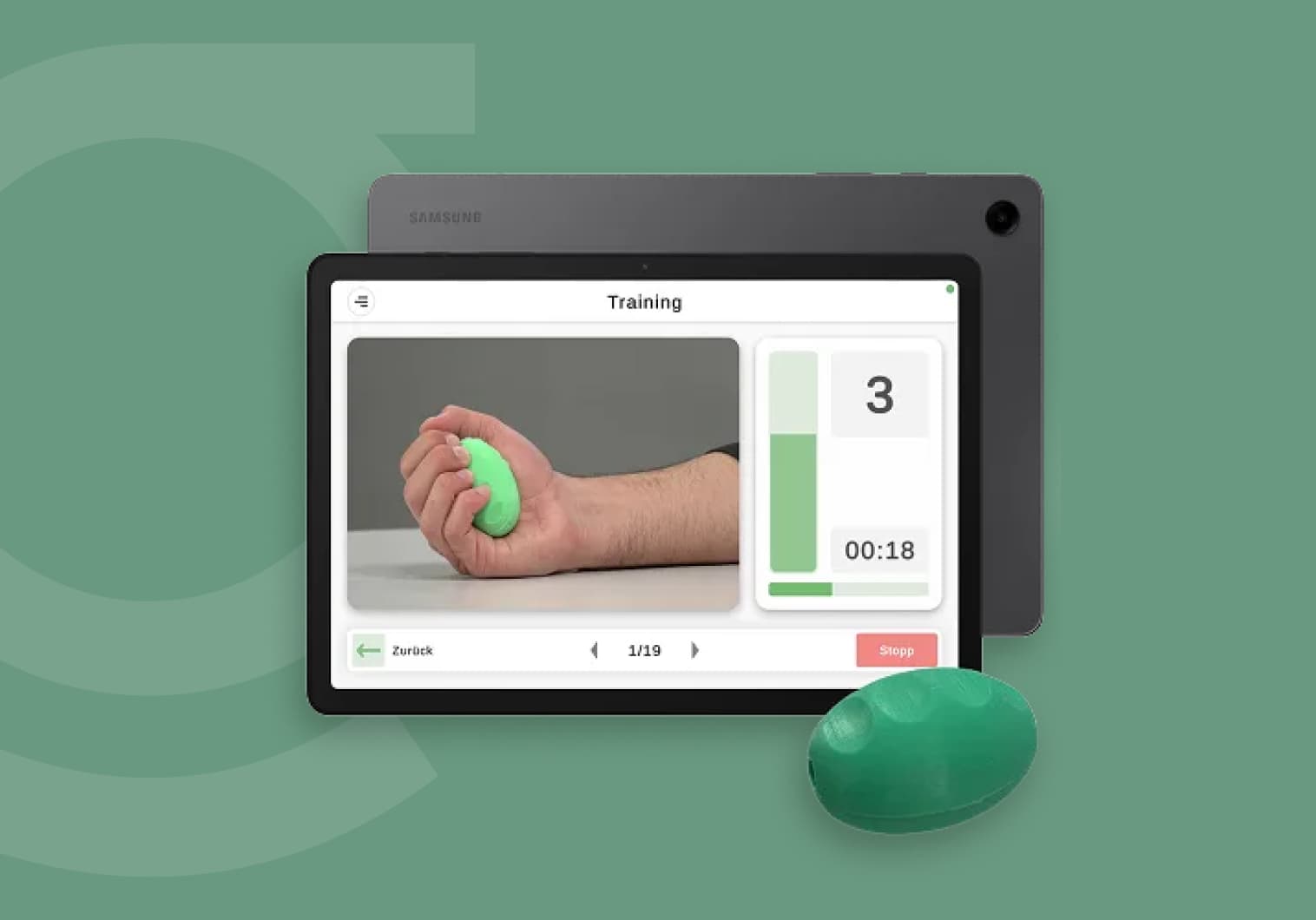
Their core product, the DextEgg system, blends physical rehabilitation with digital feedback and gamified interaction. Built on strong research foundations, the solution had already been validated in practice and was actively evolving into a broader digital rehabilitation system.
What did our client need
As the product expanded beyond a single application, GoRehab needed to define how the system should scale. While the initial request focused on designing a therapist-facing platform, the key requirement was to establish a structured approach to growth.
We proposed shifting the focus towards a platform-level perspective, including:
clear system architecture across applications
defined integration between mobile and web components
alignment with future regulatory requirements.
This allowed us to move from designing a single interface to establishing a scalable and certifiable product foundation.
Project in Numbers
0 day
2 day
product and architecture workshop
0+
5+
specialists across product, UX, and regulatory
0
2
interconnected applications structured (patient and therapist
0
1
unified platform architecture defined
How did we approach it?
We structured the engagement as a focused product and architecture phase, combining product, technical, and regulatory perspectives into one decision-making process.
Product workshop
We began with workshops to align on the full system scope, including relationships between the patient and therapist applications, data flows, and ownership of key components.
This allowed us to move from isolated features to a shared understanding of the product as a connected system.
Product structure and system design
Instead of treating the therapist application as a separate layer, we defined how both applications should operate within a single platform.
This included:
defining integration between mobile and web components
identifying areas where refactor of patient application would bring long-term value
aligning product structure with future scalability needs.
A key decision at this stage was to adjust the use of Unity, introducing React Native where lower complexity did not justify the overhead. At the same time, we highlighted that React Native can be useful when we want to avoid performance issues by building a multithreaded architecture.
Regarding the existing mobile application and its upcoming rework, we sketched initial ideas for how we can integrate it with the future application. One of the most important answers we gave our client was that we can create a layered architecture that allows us to replace parts, such as the mobile front-end, without impacting other components.
Architecture and regulatory alignment
We defined a high-level system architecture that clarified component responsibilities, backend structure, and scalability assumptions.
In parallel, we aligned the product structure with potential regulatory pathways (Class I vs IIa), ensuring that architectural decisions would support certification.
Roadmap and estimation
Finally, we translated the defined structure into an execution-ready plan, including prioritised scope, development roadmap, and cost estimations grounded in realistic architectural assumptions.
Communication and collaboration
The engagement was run as a series of structured working sessions, where product, technical, and regulatory decisions were discussed and validated jointly with the client team.
This ensured that key assumptions were clarified early, trade-offs were made transparently, and the direction remained consistent across all stakeholders.
Revolve helped us look beyond the immediate product requirements and define how the entire system should evolve. By bringing product, technical and regulatory perspectives together, they gave us a clear architecture and roadmap for scaling without introducing unnecessary complexity or rebuilding the platform later.

Co-Founder at GoRehab
Project's Team

Kama Wodyńska
Project Leader

Natalia Milerska
UX/UI Designer

Wojciech Ryczko
Technical Expert

Marta Danch-Wierzchowska
Business Analyst

Bartosz Sanicki
Regulatory Specialist
What we delivered?
This phase established a structured foundation for scaling the product, enabling the client to make informed product, technical, and regulatory decisions.
Defined application scope aligned with medical device classification, including clear boundaries for Class I and future Class IIa scenarios
Prioritised feature set, allowing the team to focus on what is required for the initial release versus later expansion
Clickable prototype, supporting internal alignment and validation of the therapist-facing experience
High-level system architecture, clarifying system components, responsibilities, and key technical assumptions
Defined integration model between the existing mobile application and the planned web platform
Presented a hybrid approach that Unity can be used for more advanced games, embedding Unity as a native module while keeping simpler interactions in React Native
Development roadmap with cost estimation, providing visibility into timelines and investment required for further development
This gave the client clarity on how to scale the product without introducing structural complexity or regulatory risk, while maintaining control over scope and costs.
Scale your product without rebuilding it later
If your digital health product is growing beyond its current structure, we help you define architecture and regulatory direction early so scaling remains predictable.